


Should You Wash or Iron a Signed Jersey Before Framing?
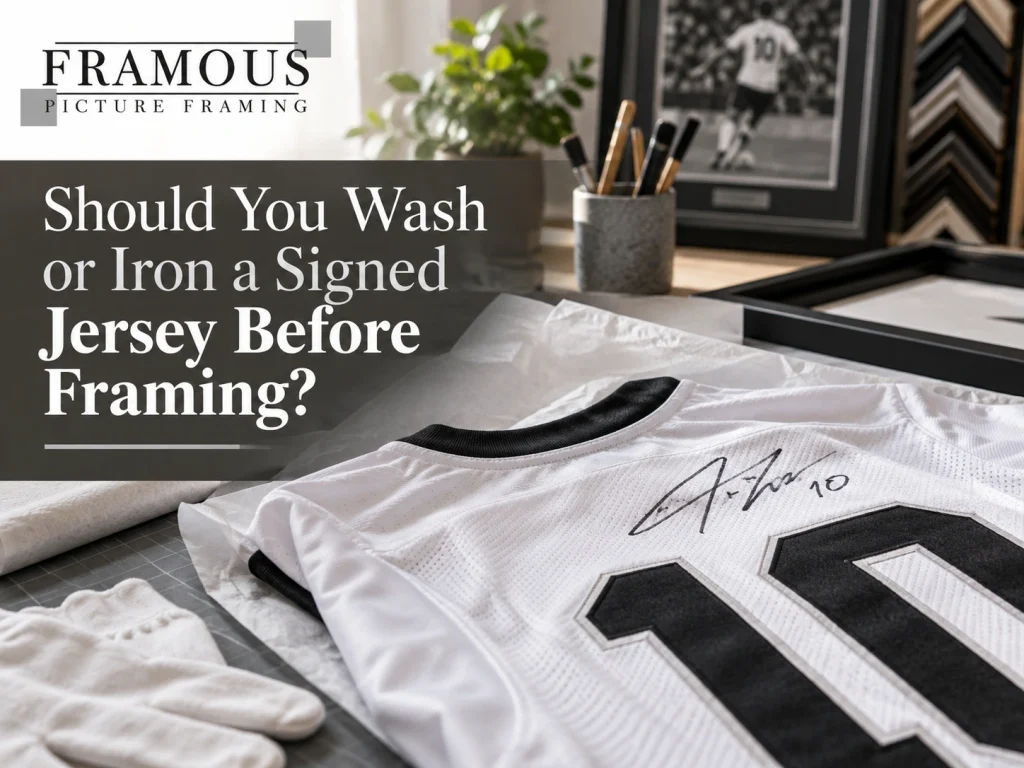
No, you should not wash or iron a signed jersey before framing it. Washing can cause the autograph to fade, bleed or smudge, while ironing may damage the ink, fabric and printed details.
Perhaps you’ve got a signed AFL guernsey with grass stains or a football shirt that’s been folded away for years. Naturally, you want it looking its best when framed.
But once a player has signed a jersey, it needs different care from an ordinary sports shirt.
At Framous Picture Framing, we’ve been helping Perth customers preserve treasured memorabilia since 1985. We recommend leaving your jersey in its current condition until it has been assessed.
Here’s what you should know before attempting any cleaning or crease removal.
Can You Wash a Signed Jersey Without Damaging the Autograph?
Washing can permanently damage a signed jersey because autograph ink may react to water, detergent and friction. The outcome depends on the marker used, the fabric and where the player signed it.
Most modern sporting jerseys contain polyester, often with printed numbers, sponsor logos and embroidered badges. Although these garments are designed for regular wear, their washing instructions don’t account for autographs added afterwards.
How Water and Detergent Affect Signature Ink
A signature written with permanent marker isn’t necessarily washproof.
Some inks penetrate the fabric fibres, while others remain closer to the surface. Washing can disturb either type, particularly when detergent and movement are involved.
Common problems include:
- Fading: The autograph becomes lighter and harder to read.
- Bleeding: Ink spreads into surrounding fibres, leaving blurred edges.
- Smudging: Rubbing affects the original pen strokes.
- Loss of detail: Fine lines and smaller parts of the signature disappear.
The signed surface also matters. An autograph across a printed number may behave differently from one written directly onto polyester.
Even if you’ve seen someone successfully wash a signed jersey, that doesn’t mean yours will respond the same way.
Is Hand Washing or Spot Cleaning Any Safer?
Hand washing and spot cleaning still carry risks, even when you avoid the signed area.
Moisture can spread through fabric beyond the area being cleaned. Detergents, stain removers and rubbing alcohol may also affect ink or surrounding graphics.
And dry cleaning isn’t automatically safer. The solvents and mechanical action involved can be unsuitable for certain inks and delicate garments.
Our advice is to avoid experimenting with cleaning methods on valuable autographs. If a stain genuinely needs treatment, consult a qualified textile conservator rather than attempting to remove it yourself.
Can You Iron or Steam a Signed Jersey Before Framing?
Ironing or steaming a signed jersey isn’t recommended because heat, pressure and moisture may damage the autograph or garment. Even when you’re only trying to remove wrinkles, the process can affect other important details.
Many AFL, soccer and rugby shirts are made from synthetic materials that can become shiny, distorted or damaged under excessive heat.
Here’s where problems can occur:
| Jersey detail | Possible damage from heat or steam |
| Autograph ink | Changes in appearance, smudging or transfer |
| Printed player numbers | Softening, peeling or distortion |
| Sponsor logos | Damage to printing or adhesives |
| Polyester fabric | Shiny patches or permanent distortion |
| Embroidered badges | Flattening of raised stitching |
What About Ironing Inside Out?
Turning the jersey inside out doesn’t completely protect the autograph.
Heat passes through the fabric, so a signature or printed number on the other side may still be affected.
The same applies to using a towel or pressing cloth between the iron and jersey. Although these methods may be suitable for certain everyday garments, they don’t guarantee protection for signed memorabilia.
If the jersey has deep creases, leave them alone rather than trying to flatten them yourself.
Is Steaming Better for Removing Wrinkles?
Steaming avoids direct pressure from an iron, but it still exposes the garment to heat and moisture.
Condensation may reach the signature, while high temperatures can affect certain printed details and adhesives.
We recommend avoiding handheld steamers, steam irons and tumble dryers until the jersey has been assessed.
A professional framer can consider how the fabric will sit when mounted. Removing every wrinkle beforehand isn’t necessary, and some creases may be safer to leave undisturbed.
What to Do With a Dirty, Stained or Match Worn Jersey
Leave stains and signs of wear untreated until you’ve had the jersey assessed. A dirty shirt doesn’t always need cleaning before framing, especially when it’s an authentic piece of match-worn memorabilia.
Think about an AFL guernsey worn during a memorable final. Grass marks, mud or other signs of play may be part of its history.
Washing those details away could change the condition that makes the garment special.
Should You Remove Grass, Mud or Sweat Stains?
For authentic match-worn jerseys, preserving the original appearance is often preferable to removing stains.
The situation is different when contamination threatens the fabric. Dampness, active mould or serious deterioration needs attention before the jersey can be safely framed.
Don’t spray fabric freshener over an unpleasant smell or apply stain remover to affected areas.
If the jersey is damp or mouldy, keep it separate from other memorabilia and seek specialist conservation advice.
For ordinary dry stains, leaving them untouched is generally the more cautious approach.
What If Your Signed Jersey Is Already Damaged?
A faded signature, peeling number or weakened section of fabric needs careful handling, not further cleaning.
Avoid tracing over faded ink or using glue to reattach printed details. These attempts can permanently change the original garment.
Take photographs of the damage and discuss the condition before framing.
With older jerseys, even repeated folding and unfolding can put stress on weakened fibres. Handle them as little as possible.
How to Prepare a Signed Jersey for Framing
You only need to check the jersey’s condition, handle it carefully and transport it safely. There’s no requirement to wash, iron or make it completely wrinkle-free before bringing it to Framous Picture Framing.
A few simple precautions can help prevent further damage.
- Inspect the jersey carefully. Look for existing stains, loose stitching, fading signatures, peeling numbers and damp areas. Avoid rubbing or stretching the material during inspection.
- Photograph the autograph. Take clear pictures of the signed area and any existing damage. This gives you a record of its condition before framing.
- Keep your hands clean and dry. Handle the garment away from the autograph wherever possible. Avoid repeatedly touching the signed area.
- Store it somewhere cool and dry. Keep the jersey away from direct sunlight, moisture and excessive heat. Don’t leave it in a hot car.
- Transport it with proper support. If possible, lay it flat inside a clean, rigid box. Where folding is unavoidable, use acid-free tissue paper to support gentle folds away from signatures and printed details.
Once the jersey has been assessed, suitable mounting options can be discussed.
Our guide to football jersey framing explains how sporting shirts can be professionally presented.
It’s also worth thinking about long-term protection. Light exposure, moisture and unsuitable materials can gradually affect autographs and fabric. Our guide to preserving autographed memorabilia explains these concerns in more detail.
Remember, framing can help protect an autograph, but it cannot restore signature ink that has already washed away.
Get Advice Before Cleaning Your Jersey at Framous Picture Framing
If your signed jersey has stains, creases or signs of wear, bring it to Framous Picture Framing before attempting to wash or iron it.
Since 1985, we’ve been framing treasured items for Perth customers, including sporting memorabilia, shirts and other textiles.
At our Midland studio, we can discuss your jersey’s condition, the location of the autograph and suitable framing options. If specialist textile treatment is needed, that should be considered before any cleaning takes place.
For those exploring jersey framing in Perth, our guide to jersey framing costs in Perth can help with the next step.
Whether it’s a signed AFL guernsey, cricket shirt, or match-worn football jersey, our priority is helping you protect what makes it special.
Before reaching for the washing machine or iron, discuss your signed jersey with our team. We’re happy to talk through your framing needs.
Contact Framous Picture Framing
FAQs
What if I accidentally washed my autographed jersey?
Allow the jersey to dry naturally without rubbing or applying heat. Photograph any damage and seek professional advice before attempting further treatment.
Can hairspray protect a jersey signature before washing?
No. Hairspray isn’t a reliable protective treatment for autographs. Its ingredients may affect ink or fabric and leave unwanted residue.
Can you iron around an autograph without touching it?
Ironing nearby still exposes the garment to heat and creates a risk of accidental contact. Avoid pressing valuable signed jerseys before professional assessment.
Can a jersey be framed with old sweat stains?
Yes, if the garment is dry and stable. Old stains don’t automatically prevent framing, but dampness, active mould or deterioration should be assessed first.

Leave a Reply