

A Complete Guide on How To Frame Aboriginal Art
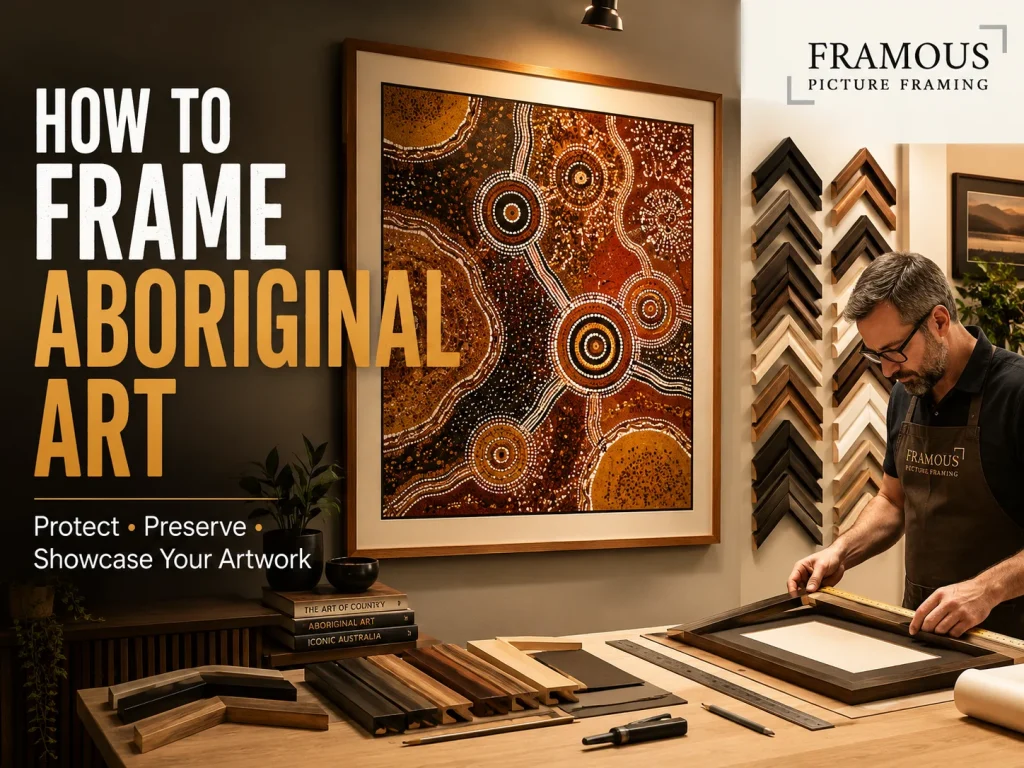
Aboriginal and Torres Strait Islander art is an expression of identity, culture, spirituality, and relationships to beloved Australia, so it should always be handled with care.
To frame Aboriginal art correctly, choose a frame that matches the artwork’s material and use conservation-grade mounting and glazing. This will preserve the artwork’s cultural and artistic value while protecting it from light, dust, and environmental damage.
In this article, you’ll learn how to choose the right frame, mounting method, and glazing to protect and display Aboriginal art correctly.
Best Framing Methods by Artwork Medium
We know that the medium of every artwork is different, so it must not be framed the same way. The goal is to choose a framing method that enhances the artwork without damaging it over time.
| Artwork Medium | Framing Approach |
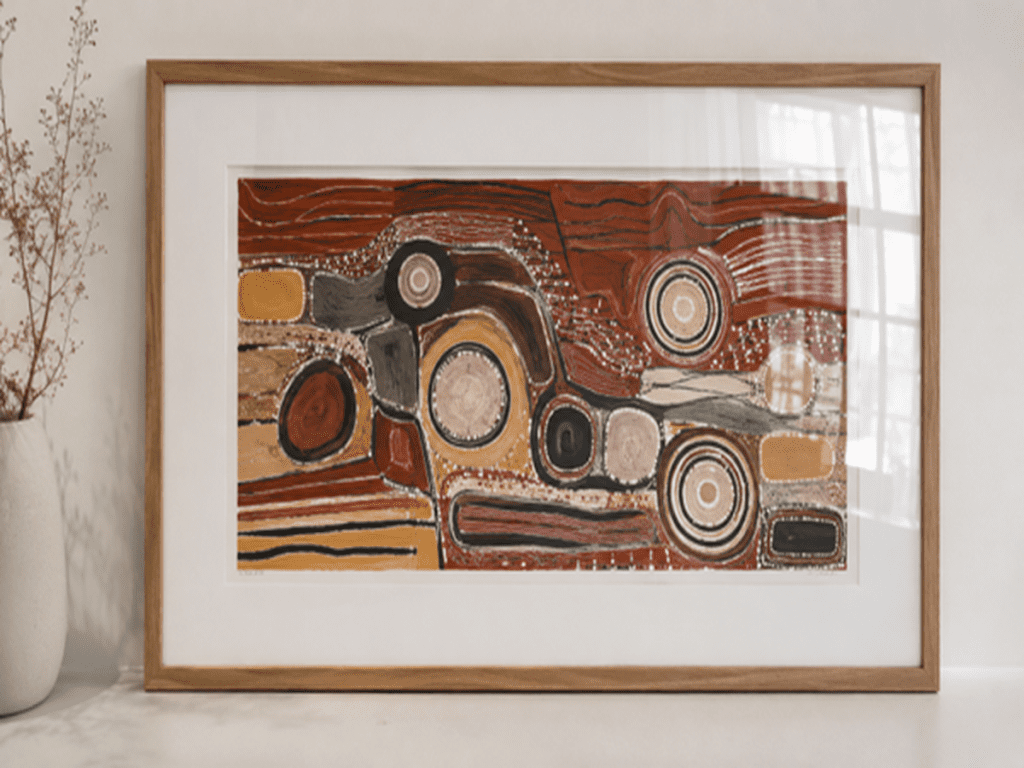
| Acrylic on canvas or linen | Best framed by stretching it over custom timber stretcher bars, then finishing with a floating frame to give the artwork breathing room and a polished gallery look. |
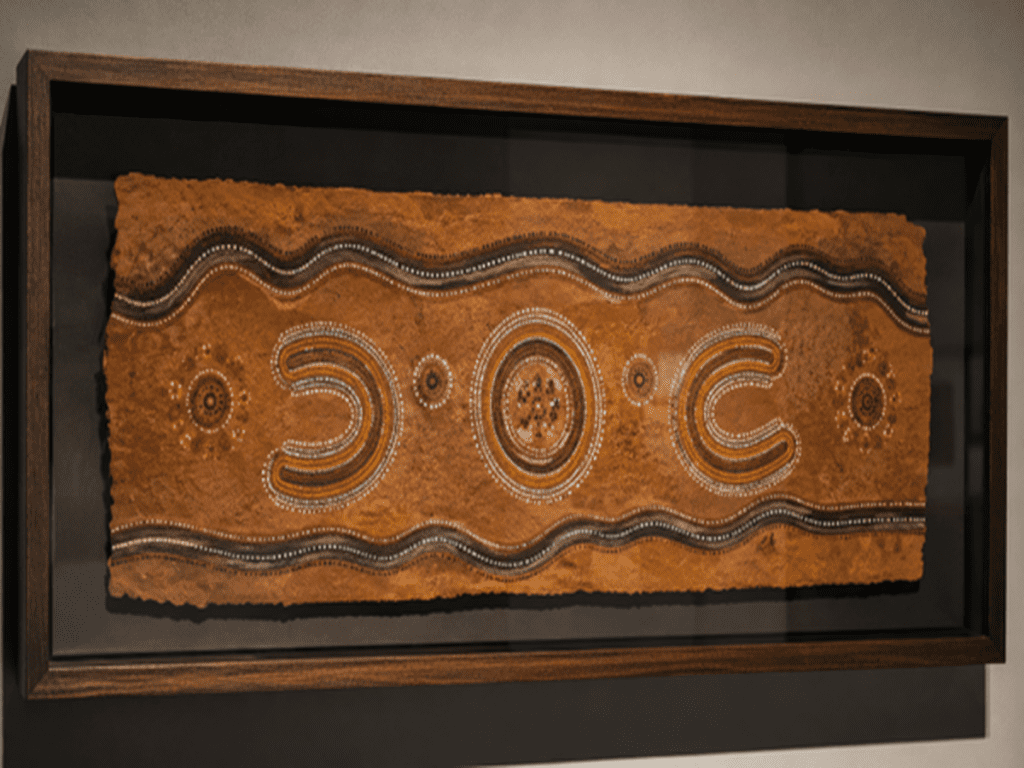
| Natural pigment / Ochre works | A shadow box frame works well here, with either glass or acrylic glazing to help protect the surface while still keeping the artwork visually open. |
| Paper-based art and watercolours | Use archival matboards that are acid-free, along with UV-protective acrylic or museum-grade glazing, so the artwork is preserved and the surface never presses directly against the front. |
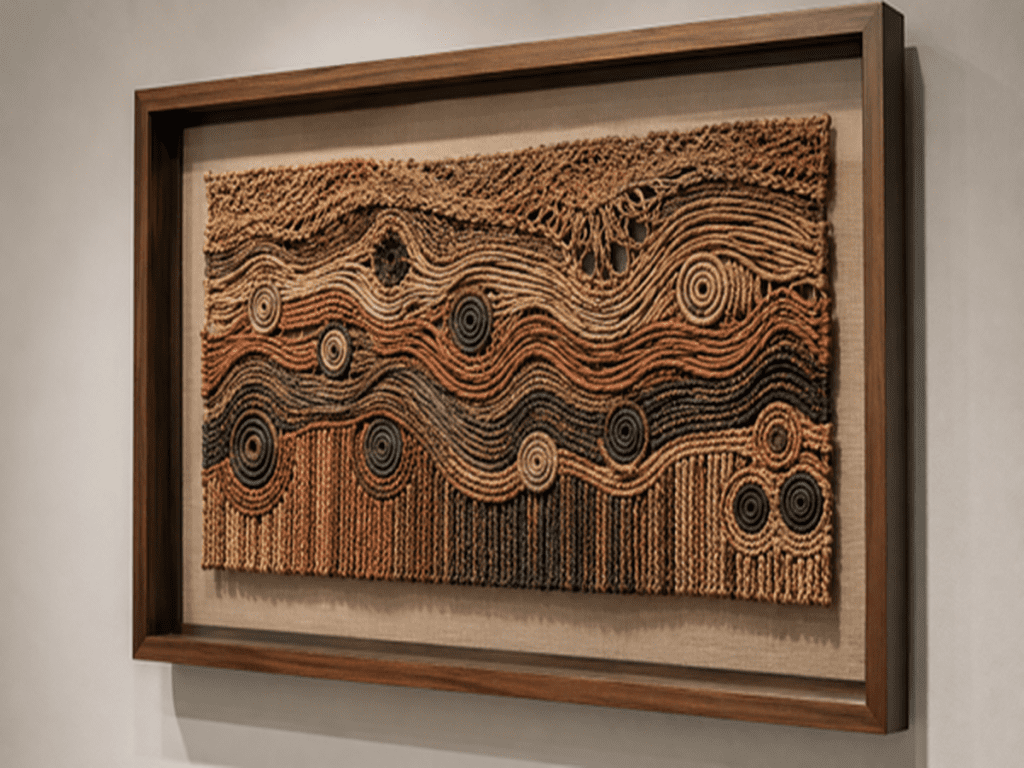
| Weavings and fibre pieces | These are best gently flattened first, then mounted with care using discreet clips or placed inside a deep shadow box frame that supports the texture and depth of the piece. |
How to Frame Aboriginal Art
The best way to frame Aboriginal art is to use archival-quality materials, UV-protective glazing, and a framing method suited to the artwork’s medium. Canvas works often suit floating frames, while paper, bark, and textile artworks benefit from conservation or shadow box framing for long-term protection.
Select the Right Frame Style
The best frame style is the one that fits the artwork, not the trend. A slim timber frame can work well for some pieces, while a box frame or floating frame can suit more contemporary canvas works. The aim is to support the art, keep it visually clean, and let the artwork do the talking.
Consider Float Mounting for Canvas Art
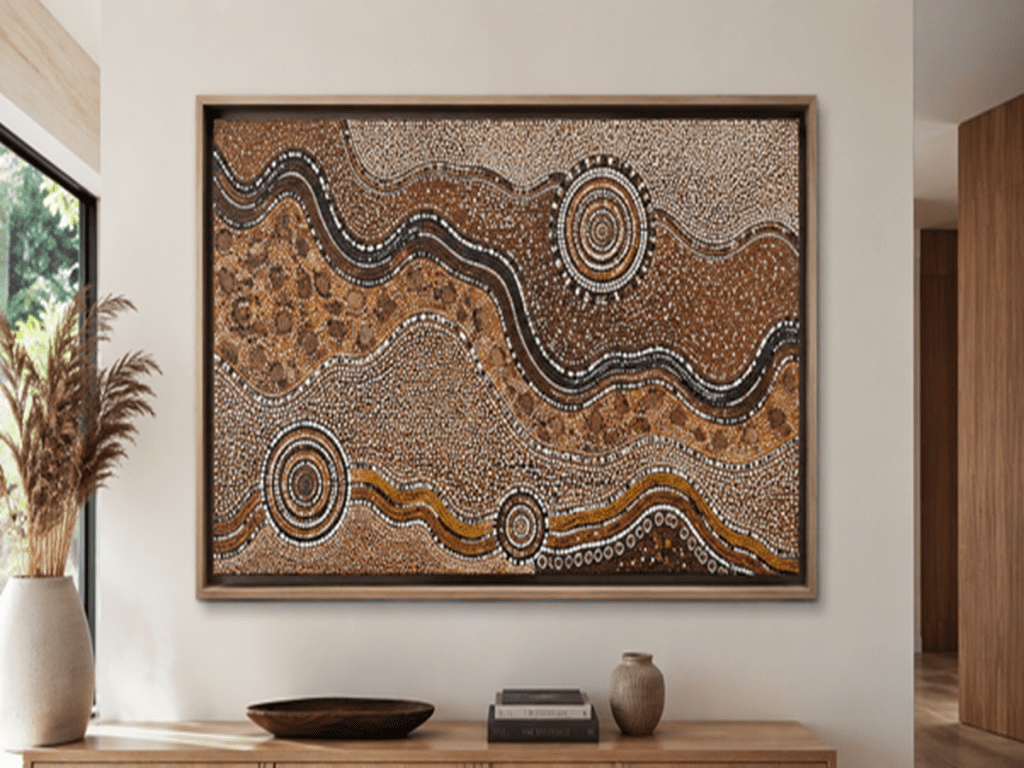
If you are dealing with stretched canvas framing, float mounting is often a smart choice. It gives the artwork a little breathing space inside the frame and creates that neat “floating” effect many people love. It also works very well for stretched desert paintings and other canvas pieces where you want to keep the edges visible.
The canvas is stretched on stretcher bars first, then framed in a way that keeps the finish clean and professional.
Use Shadow Box Framing for Fibre Art and Textiles
Shadow box framing is ideal when the piece has texture, depth, or delicate raised elements. It gives the artwork room without flattening it against the glass. That makes it a strong option for woven artwork framing and textile-based pieces that need both visibility and protection.
Avoid DIY Adhesives and Permanent Mounting
Please do not use glue, sticky tape, or permanent mounting methods on valuable artwork. These shortcuts can stain, warp, or damage the piece over time, and they are often hard to reverse.
If you care about the artwork, use reversible, conservation-minded methods instead.
Check the Aboriginal Art Orientation Before You Frame it
Before you frame the piece, make sure you know the correct Aboriginal art orientation and which way up it should hang. Not every artwork has a single fixed orientation, but some do, and the artist’s notes or gallery information should always guide you. Taking that step shows respect for the artwork and its cultural significance.
Professional Aboriginal Art Framing in Perth | Framous Picture Framing
If you are in Perth and want to frame your Aboriginal art, Framous Picture Framing can help you with custom framing. So you get a frame that works for the artwork.
The way the artwork is displayed is just as important as the frame, since the long-term condition is affected by light, humidity and changes in temperature.
That’s where professional art framing by Framous comes in to make this easy for you. You provide the artwork, and we assist you in selecting the perfect style of frame, the right glazing and the right finish for your piece.
FAQs
What is the best way to frame Aboriginal art?
The ideal solution is to utilise archival quality materials, UV protection glass and a frame style that matches the genre of artwork. A floating frame can be a good choice for canvas works. Conservation frame is generally the safer choice for works on bark or paper.
Should Aboriginal art be framed with glass?
Usually, yeah. The artwork is shielded from dust, handling and exposure to light by glass or acrylic glazing. Often, museum glass or other glazing with UV protection is better for precious objects.
What type of frame is best for Dot paintings?
Dot paintings frequently look good in a floating frame or a clean classical frame. The trick is to make the framework simple enough to support the art but not compete with it.
How to protect Aboriginal art from fading?
Aboriginal art can be protected by using UV-protecting glass, away from direct sunlight, and no hanging in regions with intense heat, moisture, or large temperature differences. The archival backing and acid-free materials also lend protection to the piece over time.
