

A Guide To Different Framing Glass Types
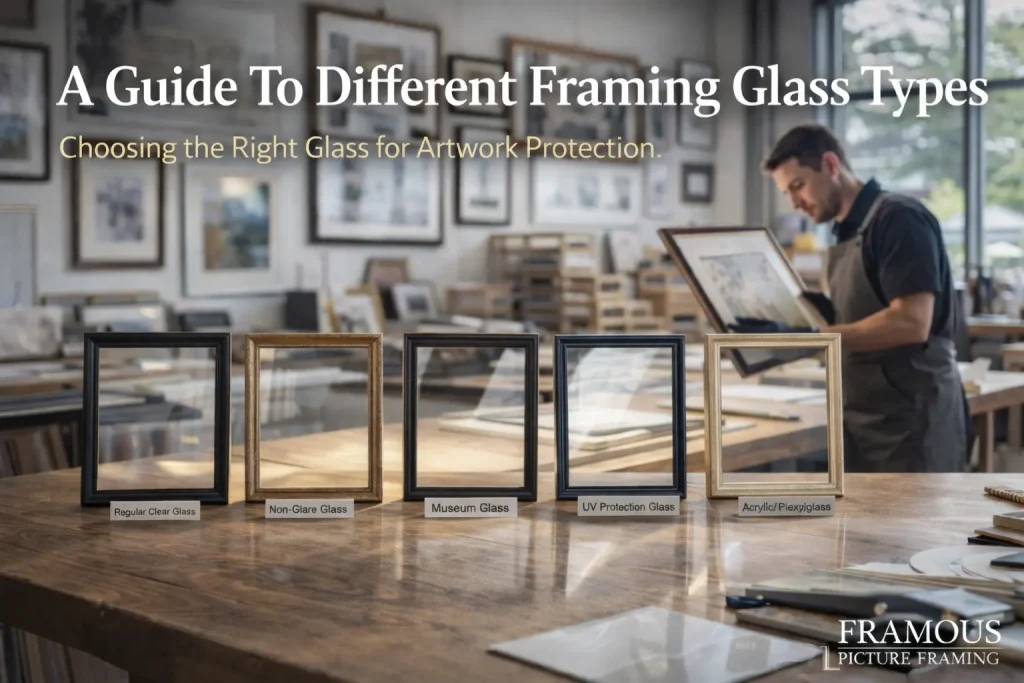
There are different framing glasses available, such as standard clear glass, anti-reflective glass, museum-grade glass and many more. Later in the blog, we will discuss all of them in detail.
Why is it important for you to learn about glass framing pictures?
Because if you choose the wrong type of glass, reflections will block your view, or sunlight will fade the image. But when you choose the right framing glass, your picture or artwork will stay protected for many years.
Without wasting time, let’s learn about the most common framing glass types and how to choose the right one for your frame. So you become knowledgeable enough that you will have no confusion when buying framing glass.
Read: Avoid These 9 Art Framing Mistakes – Protect Your Art with Expert Framers in Perth
Why Framing Glass Matters for Artwork and Photos
Many people think glass is just a protective cover, but it actually plays a much bigger role. The type of glass you choose affects both protection and visibility. For example, the wrong picture frame glass creates reflections that make it hard to clearly see the artwork.
Protection From Dust and Damage
If you use quality glass for photo frames, it will help in creating a protective barrier that keeps your artwork clean and safe. Glass protects your artwork from dust, dirt, and fingerprints. Without proper glazing, your photo or artwork can easily become damaged over time.
UV Protection and Colour Preservation
As we know, sunlight fades photographs, posters, and prints. Moreover, UV rays break down pigments in paper and ink. To overcome this, some advanced framing glass options can block up to 99% of ultraviolet light. So your artwork maintains its colours for many years.
Improved Viewing Experience
Another reason to choose the right glazing is visibility. Many people notice strong reflections when they hang frames near windows or ceiling lights. Special glazing options reduce glare and make the artwork easier to see.
7 Major Framing Glass Types
There are many picture frame glasses available here in Western Australia. Each type of glass offers different benefits depending on your needs.
The most common types of framing glass are as follows:
- Standard clear glass
- Non-glare glass
- Anti-reflective glass
- UV protective glass
- Conservation glass
- Museum glass
- Acrylic or plexiglass
Now let’s understand them in detail, one by one:
Standard Clear Glass
Standard clear glass is the most commonly used glazing option in ready-made frames. Because of its simplicity, clear glass is often used in everyday glass frames for picture displays, such as family photos or posters.
Most frames sold in stores include this basic glass type because it is affordable and easy to produce. It is typically made from simple float glass that provides clear visibility.
Benefits of Clear Glass
The main benefit of clear glass is that it is one of the most affordable glazing options available.
Other advantages include:
- Clear visibility
- Easy replacement
- Wide availability
For simple decorative frames, clear glass usually works perfectly fine.
Limitations
However, clear glass has a few drawbacks.
It does not provide UV protection, and it can create strong reflections under bright lighting. So, if you are framing something valuable or sentimental, you may want to consider a more advanced glazing option.
Non-Glare Glass (Matte Glass)
Non-glare glass is designed to reduce reflections. It has a slightly textured surface that diffuses light, which helps minimise glare.
This type of glazing works well in bright rooms where reflections can make artwork difficult to see.
Advantages
Non-glare glass is useful when frames are placed near windows or bright lights. It allows you to see the artwork more easily without strong reflections interfering with your view.
Non-glare glazing is recommended for hallways, offices, and living rooms.
Drawbacks
The main drawback of non-glare glass is that the textured surface can slightly soften the image. Because of that, fine details in photographs or artwork may appear a little less sharp compared to other glazing options.
Anti-Reflective Glass (AR Glass)
What Anti-Reflective Glass Is
Unlike non-glare glass, which uses a textured surface, this type uses special optical coatings that reduce light reflection. Anti-reflective glass is designed to reduce reflections while maintaining excellent clarity.
Key Benefits
One major advantage of anti-reflective glazing is how clear the artwork appears. You will notice:
- Much less glare
- Better colour visibility
- Sharper image details
Because of the above benefits, many photographers prefer this glazing when displaying their prints.
Best Uses
If you want the artwork to look like there is no glass in front of it, anti-reflective glass will be an excellent choice. Anti-reflective glass is ideal for:
- Photography prints
- Art prints
- Detailed illustrations
UV Protective Glass
UV protective glass helps block ultraviolet rays from sunlight. These rays are one of the main reasons artwork fades over time. If you use UV-blocking glass, it will keep colours bright and will prevent long-term damage.
Protection Level
Many UV-blocking glazing options can filter out a large portion of harmful UV rays. This makes them especially useful for frames placed in rooms that receive direct sunlight.
When to Use It
If your frame hangs near a window, UV protective glazing will be a smart choice. UV glass works well for:
- Family photos
- Posters
- Printed artwork
Conservation Glass
While framing valuable or sentimental items, conservation glass is a go-to option for professional framers
Key Feature
Conservation glass can block around 99% of UV rays, making it one of the best choices for preserving artwork. This type of glazing helps in preventing fading and deterioration caused by sunlight.
Best Applications
Conservation glass is used for:
- Certificates
- Collectible prints
- Historical photographs
- Artwork with sentimental value
Many collectors prefer conservation glass to protect items for decades.
Museum Glass (Premium Framing Glass)
Museum glass is considered the highest quality framing glass available. It is commonly used in art galleries and museums. This glazing combines advanced UV protection with extremely low reflection.
Key Features
Museum glass offers several premium benefits that allow viewers to see the artwork clearly without glare. Some features include:
- Very low reflection
- High clarity
- Around 99% UV protection
When to Choose Museum Glass
Museum glass will be best for:
- Valuable artwork
- Gallery displays
- Rare prints
Acrylic or Plexiglass Framing
Acrylic glazing is a plastic alternative to traditional glass. Large frames use acrylic because it is lightweight and harder to break.
Benefits
Acrylic is commonly used when shipping artwork or installing large wall frames. Acrylic offers several advantages, including:
- Lightweight material
- Shatter resistance
- Safer for large frames
Drawbacks
However, acrylic can scratch more easily than glass. It also builds up static electricity, which can attract dust to the surface.
ALSO READ: Custom Framing Cost: How Much It Costs to Custom Frame a Picture in Perth
How To Choose the Right Framing Glass
Imagine you frame your graduation photo and hang it near a sunny window. A few years later, the colours start fading because the frame used basic glass. So it is very important to choose the right framing glass.
Choosing the right glazing depends on several factors.
Lighting Conditions
If your frame is in a bright room, you should choose anti-reflective or non-glare glass.
Artwork Value
For valuable artwork, conservation glass or museum glass will be best as they offer the best protection.
Frame Size
Large frames use acrylic because it is lighter and safer. So it is the best choice if you want to frame large pictures.
Top Picture Framers in Midland | Framous Picture Framing
The right framing glass protects your artwork and improves how it looks on display.
If you want expert advice or custom framing solutions, Framous Picture Framing offer professional services that will help you to choose the right glass for your frame. You can book a free consultation first, or just bring your artwork. We will take care of everything.
