

Uncategorized

A Complete Guide on How To Frame Aboriginal Art 150 150 digital_admin

A Complete Guide on How To Frame Aboriginal Art

Aboriginal and Torres Strait Islander art is an expression of identity, culture, spirituality, and relationships to beloved Australia, so it should always be handled with care.

To frame Aboriginal art correctly, choose a frame that matches the artwork’s material and use conservation-grade mounting and glazing. This will preserve the artwork’s cultural and artistic value while protecting it from light, dust, and environmental damage. 

In this article, you’ll learn how to choose the right frame, mounting method, and glazing to protect and display Aboriginal art correctly.

Aboriginal paper artwork framed with archival matboard and UV protective glazing

Best Framing Methods by Artwork Medium 

We know that the medium of every artwork is different, so it must not be framed the same way. The goal is to choose a framing method that enhances the artwork without damaging it over time.

Artwork MediumFraming Approach
Acrylic on canvas or linenBest framed by stretching it over custom timber stretcher bars, then finishing with a floating frame to give the artwork breathing room and a polished gallery look.
Natural pigment / Ochre worksA shadow box frame works well here, with either glass or acrylic glazing to help protect the surface while still keeping the artwork visually open.
Paper-based art and watercoloursUse archival matboards that are acid-free, along with UV-protective acrylic or museum-grade glazing, so the artwork is preserved and the surface never presses directly against the front.
Weavings and fibre piecesThese are best gently flattened first, then mounted with care using discreet clips or placed inside a deep shadow box frame that supports the texture and depth of the piece.

How to Frame Aboriginal Art

The best way to frame Aboriginal art is to use archival-quality materials, UV-protective glazing, and a framing method suited to the artwork’s medium. Canvas works often suit floating frames, while paper, bark, and textile artworks benefit from conservation or shadow box framing for long-term protection. 

Select the Right Frame Style

The best frame style is the one that fits the artwork, not the trend. A slim timber frame can work well for some pieces, while a box frame or floating frame can suit more contemporary canvas works. The aim is to support the art, keep it visually clean, and let the artwork do the talking.

Consider Float Mounting for Canvas Art

If you are dealing with stretched canvas framing, float mounting is often a smart choice. It gives the artwork a little breathing space inside the frame and creates that neat “floating” effect many people love. It also works very well for stretched desert paintings and other canvas pieces where you want to keep the edges visible. 

The canvas is stretched on stretcher bars first, then framed in a way that keeps the finish clean and professional.

Aboriginal canvas artwork displayed in a custom floating frame with professional gallery style framing

Use Shadow Box Framing for Fibre Art and Textiles

Shadow box framing is ideal when the piece has texture, depth, or delicate raised elements. It gives the artwork room without flattening it against the glass. That makes it a strong option for woven artwork framing and textile-based pieces that need both visibility and protection.

Aboriginal ochre artwork protected and displayed in a custom shadow box frame

Avoid DIY Adhesives and Permanent Mounting

Please do not use glue, sticky tape, or permanent mounting methods on valuable artwork. These shortcuts can stain, warp, or damage the piece over time, and they are often hard to reverse. 

If you care about the artwork, use reversible, conservation-minded methods instead.

Check the Aboriginal Art Orientation Before You Frame it

Before you frame the piece, make sure you know the correct Aboriginal art orientation and which way up it should hang. Not every artwork has a single fixed orientation, but some do, and the artist’s notes or gallery information should always guide you. Taking that step shows respect for the artwork and its cultural significance.

Aboriginal woven fibre artwork displayed in a deep shadow box frame with conservation framing

Professional Aboriginal Art Framing in Perth | Framous Picture Framing

If you are in Perth and want to frame your Aboriginal art, Framous Picture Framing can help you with custom framing. So you get a frame that works for the artwork.

The way the artwork is displayed is just as important as the frame, since the long-term condition is affected by light, humidity and changes in temperature.

That’s where professional art framing by Framous comes in to make this easy for you. You provide the artwork, and we assist you in selecting the perfect style of frame, the right glazing and the right finish for your piece.

FAQs

What is the best way to frame Aboriginal art?

The ideal solution is to utilise archival quality materials, UV protection glass and a frame style that matches the genre of artwork. A floating frame can be a good choice for canvas works. Conservation frame is generally the safer choice for works on bark or paper.

Should Aboriginal art be framed with glass?

Usually, yeah. The artwork is shielded from dust, handling and exposure to light by glass or acrylic glazing. Often, museum glass or other glazing with UV protection is better for precious objects.

What type of frame is best for Dot paintings?

Dot paintings frequently look good in a floating frame or a clean classical frame. The trick is to make the framework simple enough to support the art but not compete with it.

How to protect Aboriginal art from fading?

Aboriginal art can be protected by using UV-protecting glass, away from direct sunlight, and no hanging in regions with intense heat, moisture, or large temperature differences. The archival backing and acid-free materials also lend protection to the piece over time.

Entryway Mirror Ideas to Elevate Your Home’s First Impression 150 150 digital_admin

Entryway Mirror Ideas to Elevate Your Home’s First Impression

mirror

A well-placed entryway mirror can pull in light, make a narrow space wider, and give the whole area a more polished look straight away. And if you use the right frame, it becomes more than a mirror. It becomes part of the room’s style. 

At Framous Picture Framing, we have been in the custom framing business for a long time now. So in this blog, we will share the best entryway mirror ideas. Furthermore, we will share mirror styling tips as well. So keep reading till the end.

Hallway Mirror Ideas by Home Style and Design Type

We have shared many entrance mirror ideas for you below. You can choose the one you like most. This will not just be a mirror, but an important part of your home. Whenever anyone enters through the door, it will create a very nice first impression. 

Modern Minimalist Entryway Mirrors

Picture2

Design Ideas

Use slim rectangular mirrors, black-framed mirrors, arched mirrors with thin borders, or frameless mirrors with clean edges.

Benefits

  • Creates a sharp, uncluttered look
  • Works well in modern and contemporary homes
  • Makes the entryway feel more structured
  • Helps a small space feel cleaner and more open

Materials and Frame Options

  • Matte black metal
  • Slim powder-coated aluminium
  • Thin timber with a smooth finish
  • Frameless polished-edge glass

Framing Suggestions

Keep the frame thin and simple. A black frame is strong if you want contrast, while a slim timber frame works better if the space needs warmth.

Pairing Suggestions

  • Slim console table
  • One ceramic vase or lamp
  • Neutral wall colour
  • Minimal decor with clean lines

Coastal and Hamptons Entryway Mirrors

Picture30

Design Ideas

Choose round mirrors, arched mirrors, light timber-framed mirrors, or mirrors with soft white finishes.

Benefits

  • Adds a relaxed and welcoming feel
  • Softens the entryway
  • Works well with natural light
  • Makes the space feel airy and bright

Materials and Frame Options

  • Light oak
  • Whitewashed timber
  • Pale painted wood
  • Soft matte finishes

Framing Suggestions

Choose a frame that feels natural rather than heavy. Timber works especially well here because it adds warmth without taking over the room.

Pairing Suggestions

  • Timber console table
  • Woven basket or tray
  • Soft linen decor
  • Greenery or a ceramic lamp

Small or Narrow Entryway Mirrors

Design Ideas

Use tall vertical mirrors, full-length mirrors, narrow rectangular mirrors, or medium round mirrors if the wall space is tight.

Benefits

  • Makes the space feel taller
  • Helps stretch the wall visually
  • Reflects more light through a narrow hallway
  • Adds function without making the area feel crowded

Materials and Frame Options

  • Slim black metal
  • Thin timber borders
  • Frameless glass
  • Lightweight custom frames

Framing Suggestions

In small entryways, the frame should stay light and quiet. Too much detail can make the wall feel busy. A slim custom frame is often the best balance.

Pairing Suggestions

  • Narrow shelf or console
  • Wall hooks below the mirror
  • Simple key tray
  • Light-coloured walls and flooring

Luxury Statement Entryway Mirrors

Design Ideas

Go for oversized mirrors, decorative framed mirrors, sculptural shapes, arched statement mirrors, or floor-leaning mirrors.

Benefits

  • Creates a strong focal point
  • Makes the entryway feel grander
  • Reflects more light and space
  • Gives the home a more premium first impression

Materials and Frame Options

  • Brass
  • Gold finishes
  • Dark timber
  • Thick custom frames
  • Antique-style detailing

Framing Suggestions

This is where a bold custom frame works best. A wide or detailed frame can make the mirror feel more architectural and more luxurious.

Pairing Suggestions

  • Marble or timber console
  • Matching table lamps
  • Symmetrical styling
  • Refined decor with fewer pieces

Classic and Traditional Entryway Mirrors

Picture40

Design Ideas

Choose framed rectangular mirrors, softly curved mirrors, vintage-inspired shapes, or mirrors with more decorative edges.

Benefits

  • Adds timeless character
  • Suits heritage-style or formal homes
  • Feels elegant without being trendy
  • Helps the entryway feel balanced and polished

Materials and Frame Options

  • Rich timber
  • Antique gold
  • Moulded frame profiles
  • Painted wood with detail

Pairing Suggestions

A classic home suits a frame with a bit more substance. It does not need to be loud, but it should have enough presence to match the style of the home.

Pairing Suggestions

  • Traditional console table
  • Table lamp
  • Framed artwork nearby
  • Symmetrical decor styling

Custom Framed Entryway Mirrors

Picture59

Design Ideas

Use a mirror that is built around the space rather than chosen at random. This could be any shape, but the frame should be tailored to the home.

Benefits

  • Makes the mirror feel more intentional
  • Matches the entryway more closely
  • Helps the whole space feel finished
  • Adds a more premium and personal touch

Materials and Frame Options

  • Custom timber
  • Metal framing
  • Painted finishes
  • Mixed materials
  • Frame profiles matched to the interior style

Framing Suggestions

A custom frame can be matched to the wall colour, furniture, flooring, and overall interior style so the mirror feels like it truly belongs there.

Pairing Suggestions

  • Furniture with matching tones
  • Decor that repeats the frame finish
  • Clean wall styling
  • A consistent entryway colour palette

Mirrored Feature Pieces for More Personality

Picture60

Design Ideas

If you want something more distinctive, use sunburst-style mirrors, geometric mirrors, oval mirrors, or sculptural mirrors with a stronger shape.

Benefits

  • Adds personality to the entryway
  • Works as both decor and function
  • Creates a stronger visual point
  • Helps the space feel more curated

Materials and Frame Options

  • Brass
  • Matte black metal
  • Timber accents
  • Decorative custom framing

Framing Suggestions

When the mirror shape itself is already bold, keep the frame balanced. The frame should support the design, not compete with it.

Pairing Suggestions

  • Simple bench or console below
  • Neutral wall colour
  • One strong accessory rather than many
  • Soft lighting nearby

Best Mirror Shapes for Different Entryway Layouts

Different shapes create different effects. A round mirror is one of the safest choices because it works in so many homes. It softens hard edges and makes the space feel less rigid.

A rectangular mirror feels more orderly. It suits entries that already have clean lines and a more structured layout.

An arched mirror adds a little more personality. It feels elegant without being overly decorative.

Full-length mirrors are especially useful in narrow halls. They give you practical use and visual height at the same time.

Oversized mirrors are about presence. They are not subtle, and that is the point.

We have summed it up in a table, so you can look at it at a glance.

Mirror shapeIdeal EntrywaysMain Effect
RoundSoftening sharp lines, compact entrywaysCalmer, lighter look
RectangularStructured, modern spacesClean and balanced feel
ArchedElegant or premium entrancesSofter, more architectural look
Full-lengthNarrow foyers and outfit checksTaller, more practical look
OversizedLarge entryways and feature wallsStrong visual impact

Expert Ideas to Style the Mirror with Entryway Furniture

A console table is the classic choice. It gives the mirror a base and helps the whole setup feel anchored. You can place a lamp, vase, tray, or bowl on the table, but keep it simple. Too much and the whole thing loses shape.

A bench is a good option if the entryway needs to feel more relaxed and family-friendly. It adds function without making the room look crowded. A mirror above a bench also feels easy to live with, which matters in a busy home.

A shelf under the mirror can work well in smaller spaces. It gives you somewhere to drop keys, wallets, and mail without needing a full console.

Hooks or coat storage underneath the mirror are practical for real life. Not every entryway is styled for a magazine shoot. Some need to handle shoes, bags, jackets, and the whole daily mess that comes with them.

How Custom Framing Makes an Entryway Mirror More Premium

Custom framing lets you match the mirror to the home instead of making the home adjust to the mirror. It can echo the furniture, pick up the flooring tones, or bring balance to the wall colour.

It also gives the piece a more finished look. The result feels more expensive in the best way. Moreover, custom framing brings the whole look together and gives the entryway the polished first impression it deserves.

Custom Framed Entryway Mirrors Designed for Perth Homes

At Framous Picture Framing, we create custom framed entryway mirrors that feel like they truly belong in the space. Whether you love clean modern styling, soft coastal interiors, timeless classic details, or something bold and eye-catching, we can design a frame that works beautifully with your home and your personal style. 

CONTACT US TODAY

GET YOUR CUSTOM FRAMED ENTRYWAY MIRROR DESIGNED NOW

A Guide To Different Framing Glass Types 150 150 digital_admin
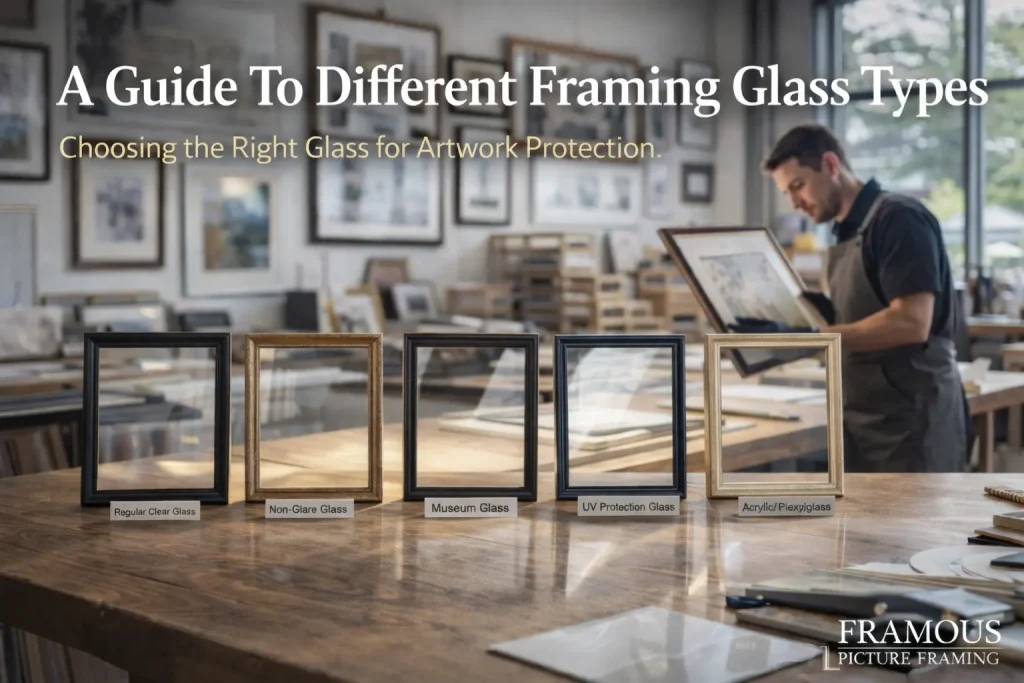
A Guide To Different Framing Glass Types

A Guide To Different Framing Glass Types

There are different framing glasses available, such as standard clear glass, anti-reflective glass, museum-grade glass and many more. Later in the blog, we will discuss all of them in detail.

Why is it important for you to learn about glass framing pictures?

Because if you choose the wrong type of glass, reflections will block your view, or sunlight will fade the image. But when you choose the right framing glass, your picture or artwork will stay protected for many years.

Without wasting time, let’s learn about the most common framing glass types and how to choose the right one for your frame. So you become knowledgeable enough that you will have no confusion when buying framing glass.

Read: Avoid These 9 Art Framing Mistakes – Protect Your Art with Expert Framers in Perth

Why Framing Glass Matters for Artwork and Photos

Many people think glass is just a protective cover, but it actually plays a much bigger role. The type of glass you choose affects both protection and visibility. For example, the wrong picture frame glass creates reflections that make it hard to clearly see the artwork.

Protection From Dust and Damage

If you use quality glass for photo frames, it will help in creating a protective barrier that keeps your artwork clean and safe. Glass protects your artwork from dust, dirt, and fingerprints. Without proper glazing, your photo or artwork can easily become damaged over time.

UV Protection and Colour Preservation

As we know, sunlight fades photographs, posters, and prints. Moreover, UV rays break down pigments in paper and ink. To overcome this, some advanced framing glass options can block up to 99% of ultraviolet light. So your artwork maintains its colours for many years. 

Improved Viewing Experience

Another reason to choose the right glazing is visibility. Many people notice strong reflections when they hang frames near windows or ceiling lights. Special glazing options reduce glare and make the artwork easier to see.

7 Major Framing Glass Types

There are many picture frame glasses available here in Western Australia. Each type of glass offers different benefits depending on your needs.

The most common types of framing glass are as follows:

  • Standard clear glass
  • Non-glare glass
  • Anti-reflective glass
  • UV protective glass
  • Conservation glass
  • Museum glass
  • Acrylic or plexiglass

Now let’s understand them in detail, one by one:

Standard Clear Glass 

Standard clear glass is the most commonly used glazing option in ready-made frames. Because of its simplicity, clear glass is often used in everyday glass frames for picture displays, such as family photos or posters.

Most frames sold in stores include this basic glass type because it is affordable and easy to produce. It is typically made from simple float glass that provides clear visibility.

Benefits of Clear Glass

The main benefit of clear glass is that it is one of the most affordable glazing options available.

Other advantages include:

  • Clear visibility
  • Easy replacement
  • Wide availability

For simple decorative frames, clear glass usually works perfectly fine.

Limitations

However, clear glass has a few drawbacks.

It does not provide UV protection, and it can create strong reflections under bright lighting. So, if you are framing something valuable or sentimental, you may want to consider a more advanced glazing option.

Non-Glare Glass (Matte Glass)

Non-glare glass is designed to reduce reflections. It has a slightly textured surface that diffuses light, which helps minimise glare.

This type of glazing works well in bright rooms where reflections can make artwork difficult to see.

Advantages

Non-glare glass is useful when frames are placed near windows or bright lights. It allows you to see the artwork more easily without strong reflections interfering with your view.

Non-glare glazing is recommended for hallways, offices, and living rooms.

Drawbacks

The main drawback of non-glare glass is that the textured surface can slightly soften the image. Because of that, fine details in photographs or artwork may appear a little less sharp compared to other glazing options.

Anti-Reflective Glass (AR Glass)

What Anti-Reflective Glass Is

Unlike non-glare glass, which uses a textured surface, this type uses special optical coatings that reduce light reflection. Anti-reflective glass is designed to reduce reflections while maintaining excellent clarity.

Key Benefits

One major advantage of anti-reflective glazing is how clear the artwork appears. You will notice:

  • Much less glare
  • Better colour visibility
  • Sharper image details

Because of the above benefits, many photographers prefer this glazing when displaying their prints.

Best Uses

If you want the artwork to look like there is no glass in front of it, anti-reflective glass will be an excellent choice. Anti-reflective glass is ideal for:

  • Photography prints
  • Art prints
  • Detailed illustrations

UV Protective Glass

UV protective glass helps block ultraviolet rays from sunlight. These rays are one of the main reasons artwork fades over time. If you use UV-blocking glass, it will keep colours bright and will prevent long-term damage.

Protection Level

Many UV-blocking glazing options can filter out a large portion of harmful UV rays. This makes them especially useful for frames placed in rooms that receive direct sunlight.

When to Use It

If your frame hangs near a window, UV protective glazing will be a smart choice. UV glass works well for:

  • Family photos
  • Posters
  • Printed artwork

Conservation Glass

While framing valuable or sentimental items, conservation glass is a go-to option for professional framers

Key Feature

Conservation glass can block around 99% of UV rays, making it one of the best choices for preserving artwork. This type of glazing helps in preventing fading and deterioration caused by sunlight.

Best Applications

Conservation glass is used for:

  • Certificates
  • Collectible prints
  • Historical photographs
  • Artwork with sentimental value

Many collectors prefer conservation glass to protect items for decades.

Museum Glass (Premium Framing Glass)

Museum glass is considered the highest quality framing glass available. It is commonly used in art galleries and museums. This glazing combines advanced UV protection with extremely low reflection.

Key Features

Museum glass offers several premium benefits that allow viewers to see the artwork clearly without glare. Some features include:

  • Very low reflection
  • High clarity
  • Around 99% UV protection

When to Choose Museum Glass

Museum glass will be best for:

  • Valuable artwork
  • Gallery displays
  • Rare prints

Acrylic or Plexiglass Framing

Acrylic glazing is a plastic alternative to traditional glass. Large frames use acrylic because it is lightweight and harder to break.

Benefits

Acrylic is commonly used when shipping artwork or installing large wall frames. Acrylic offers several advantages, including:

  • Lightweight material
  • Shatter resistance
  • Safer for large frames

Drawbacks

However, acrylic can scratch more easily than glass. It also builds up static electricity, which can attract dust to the surface.

ALSO READ: Custom Framing Cost: How Much It Costs to Custom Frame a Picture in Perth

How To Choose the Right Framing Glass

Imagine you frame your graduation photo and hang it near a sunny window. A few years later, the colours start fading because the frame used basic glass. So it is very important to choose the right framing glass. 

Choosing the right glazing depends on several factors.

Lighting Conditions

If your frame is in a bright room, you should choose anti-reflective or non-glare glass.

Artwork Value

For valuable artwork, conservation glass or museum glass will be best as they offer the best protection.

Frame Size

Large frames use acrylic because it is lighter and safer. So it is the best choice if you want to frame large pictures.

Top Picture Framers in Midland | Framous Picture Framing

The right framing glass protects your artwork and improves how it looks on display.

If you want expert advice or custom framing solutions, Framous Picture Framing offer professional services that will help you to choose the right glass for your frame. You can book a free consultation first, or just bring your artwork. We will take care of everything.
Click here and get in touch with us

11 Tips to Enhance the Look of Your Picture with Framing 150 150 admin

11 Tips to Enhance the Look of Your Picture with Framing

535e76d089

Got that dreamy click or perfect photo you’re itching to show off? It can be a wild holiday snap or a memorial of your family moments.

But how do you frame a picture it to make it the central piece of your living room?  It will not be done by just slapping a border, but bringing the best out of it. Your favourite picture with framing so exquisite that no one can take their eyes off it.

These top 11 picture framing tips will help you. So, you can create a masterpiece wall hanging out of any photo.

Framous Picture Framing is helping people turn their treasured pictures into stunning displays since 1985. Our team of experts is here to guide you through every step of the process. Blending the framing basics with creativity and care.

Let’s start revealing the secrets of photography and framing.

11 Tips to Enhance Your picture with Framing

So, how to frame a picture in a way that it stands out in whole room. Let’s find out with our expert tips and tricks reported by our framing experts.

1. Choose the Perfect Picture to Frame

    You can’t figure out how to frame photos without having a thorough look on picture itself. Is it a family portrait, a landscape shot, or a modern piece of art? Each image has its own style and mood. Know what you’re working with and then choose a frame that complements it.

    2. Measure Your Wall Space with Care

    It’s easy to get carried away with a frame, only to realise later that it doesn’t fit your wall. Grab a tape measure and jot down the dimensions of your space. Your picture with framing shouldn’t overwhelm the area. But rather, sit perfectly as part of your room’s aesthetic.

    3. Create a Paper Layout for Experimentation

    Want to see how your framed photo will look before making any holes in your wall? Try a paper layout. Cut out paper to the size of your frame and stick it to your wall with painter’s tape. This simple trick will let you move things around and visualise the final effect.

    4. Customise the Frame for a Perfect Fit

    Off-the-shelf frames rarely match to the aspect ratio of your picture. That’s why framing images always require a custom frame. Get yourself a frame that not only fits your photo but enhances its story and mood. No more one-size-fits-all!

    5. Select Protective, Non-Reflective Glass

    When choosing your frame, consider the glass as well. It should be able to protect your picture from dust & moisture. Non-reflective, UV-protective glass is ideal if your picture will hang in a bright room. It protects the artwork and cuts down on glare, so you can always see your photo of framing clearly.

    6. Match the Frame’s Colour and Style

    The frame isn’t just a border, but part of the artwork. Try to pick a frame that echoes the tones and feel of the picture. For example, an antique painting pairs well with a classic wooden frame. While a modern print looks great in a shiny metal one.

    7. Add a Mount & Mat Board

    Matboard separates the picture of framing from glass while mount provides a backing to avoid any damage. They can add elegance and breathing room around your picture. Plus, add an extra layer of protection around it. Choose a mat that complements the colours in your artwork.

    8. Hang Your Picture at the Right Height

    Don’t forget to consider where your framed piece will sit on the wall. It shouldn’t be too high or too low. The centre of the picture should be at eye level, which is about 145–155 cm from the floor. This way, your picture will be seen and admired easily.

    9. Enhance with Extra Surroundings

    Sometimes, a single picture looks even better when surrounded by others. Think about hanging several smaller frames together for a gallery wall. But keep the colour and design coordination in mind. It will create a visual interest and tell a bigger story.

    10. Keep It Simple Because Less is More

      It’s tempting to go all out, but sometimes simplicity works best. Let your picture shine by keeping the frame and matting clean and minimal. Also, don’t gather too many stuff around it. A simple arrangement won’t feel dated for years.

      11. Care for Your Frame and Artwork

        Once you have hanged your picture with framing, take a step back and admire it. And don’t forget to it the love it deserves! Dust it regularly and avoid hanging it in direct sunlight or damp areas. A little care goes a long way in preserving your cherished memories.

        Want help bringing your vision to life?

        Let Framous Picture Framing Help Your Photo with Framing

        At Framous Picture Framing, we’re your creative partners. Ready to transform your cherished memories into stunning displays. With the largest range of frame mouldings and matting in Midland. Plus, expert guidance every step of the way. So, all your framing and photography dreams can come to life.

        Reach Out to Us

        Browse Our Top Framing Samples

        FAQs

        How do I choose the right frame for my picture?

        Consider the style, colours and mood of your photo. Then, pick a frame that complements them without overshadowing the artwork.

        How do I frame a picture without damaging it?

        Use acid-free materials, protective glass & quality frame. Also avoid direct contact between the artwork and glass with mount and matting.

        What is the best height to hang a picture?

        Aim for eye level, around 145–155 cm from the floor to the centre of the picture.

        Can I change the frame later if I want to?

        Yes! A custom frame can always be swapped for a new look in the future. Remove the frame and your picture will be still looking like new.

        Should I use a mat board when framing?

        A mat board adds elegance, protects the photo, and helps balance the design.How do I clean a framed picture?
        Use a soft & dry cloth to remove the dust. Avoid harsh chemicals to keep your frame and glass spotless.

        Why Is Custom Framing So Expensive? 150 150 admin

        Why Is Custom Framing So Expensive?

        Custom Framing

        Wondering… why is picture framing so expensive? Why do frames cost a lot? What are the reasons of expensive framing canvas?

        Let’s find out few considerations with Framous Pictures to understand how and why custom picture framing is so expensive?

        Why Custom Framing Can Be Expensive: Factors

        Find the reasons of factors below with “Framous Pictures” about custom picture framing expenses.

        • Framing Material:

        Framing material does matter especially high quality frames. They oftenly made from expensive materials such as solid wood, metal, edging, or plastics. Apart from that quality matting, glass or acrylic glazing, and backing materials put importance as well. They protect and preserve the artwork, which can drive up the cost.

        Custom frames Perth craft with high-quality materials to ensure the longevity and preservation of the artwork or photograph. The choice of materials, such as premium wood, glass, matting, and UV-protective coatings, significantly impacts the cost.

        • Design Complexity:

        Mirror framing, wedding photo framing, framing canvas, and other specialized framing services often require intricate designs. The more complex the design, the more time and expertise need, leading to higher costs.

        • Framing Size:

        The larger the frame, the higher the price. This is primarily due to the amount of material required to manufacture the item. More meters of moulding to finish the frame’s perimeter, as the amount of glazing and supporting board required. The size of the frame may also affect delivery prices, however most sellers will have a set pricing below a certain size. Larger items, such as movie posters and music posters, require more materials and labor to frame properly. Size and dimensions play a significant role in determining the overall cost.

        • Picture Printing:

        Including a photograph in your frame will raise the price, which will vary depending on the size of the print and the material. Combining a print with your frame will raise the price, but you may actually save money compared to buying a frame and paying for a separate print from a different company, so if you don’t have a physical copy of what you want to frame, look for retailers who offer a picture printing and fitting service alongside their frames.

        • Readymade Frames:

        Looked for cheap picture frames, you’ve probably come across ready-made choices. These frames are mass-produce and available in a restricted number of standard sizes. The least expensive of these ready-made frames are manufactured from the least expensive materials. Framing is an art form in itself. Art framers Perth, such as those in Victoria Park, bring their creativity and expertise to create unique and aesthetically pleasing frames. The artistic touch adds value but can also increase the price.

        • Framing Making:

        Professional framing requires skilled labor and craftsmanship. Framers need to measure accurately and cut material accordingly. Assemble the frame, mount the artwork, and make sure it is properly secured and aligned. This level of expertise and attention to detail contributes to the cost.

        • Framing Customization:

        Many picture frames like mirror framing are made to order to fit the exact dimensions of the artwork. Custom framing takes more time, effort, and resources than mass-produced, standard-sized frames. Cheap poster frames are readily available, but they lack the customization and quality of custom framing. While custom framing may be expensive in comparison, it offers superior protection and aesthetics for your artwork.

        • Art Preservation:

        If the artwork has sentimental or monetary value, the framing process may include conservation-grade materials and techniques to keep it from deteriorating over time. These conservation methods are frequently more expensive. With growing environmental awareness, businesses like Planet Ark promote sustainability in framing practices so, why not to recycle and reshape the old frames.

        • Special Framing Features:

        Some frames may include extras like intricate designs, beveled edges, or decorative elements, which raise the overall cost. Ark paint, Ark soap, and Ark oil are specialty products used in the preservation of sustainable work. These products, while essential, can add to the expense of custom framing, as they ensure the artwork’s longevity.

        • Location:

        Framing costs can also depending on where you live. Framing services may be more expensive in areas with higher living costs or limited competition.

        • Framing Shop Expenses:

        Rent, utilities, insurance, and employee wages are all operational factors costs into frame shop pricing.

        • Delivery Expenses:

        If the artwork needs to be transported or shipped to a framing shop or anywhere even if it’s an order, additional costs for packaging and handling may apply.

        • Digital Marketing and Branding:

        Businesses offering custom framing services often invest in digital marketing in Perth and branding efforts. These expenses pass on to customers, contributing to the overall cost of custom framing services.

        • Brand and Reputation:

        Certain framing shops may have established a reputation for their expertise and craftsmanship, allowing them to charge higher prices due to brand recognition.

        Money Saving Tips:

        • Buy frames in bulk if possible 
        • Compare prices from different retailers and brands 
        • Get the image printed and framed at the same time rather than choosing separate options 
        • Lighter, thinner & simpler designs will be more affordable 
        • Choose stained edges 
        • Must look for sales specially in brands like Framous Pictures 
        • Recycle old frames or look for second hand frames
        • Just replace the mount 
        • Keep the frames clean and protected

        Conclusion:

        It’s important to note that the cost of framing can vary greatly depending on above mentioned factors, so getting multiple quotes and comparing prices is always a good idea before making a decision. Furthermore, for less valuable or non-sentimental artwork, less expensive framing options are fine that still provide adequate protection and display quality. Branding Perth can vary from business to business as one should explore prices through their social media marketing. The value of custom picture framing can attribute in the quality of materials, design complexity, digital marketing and branding efforts, artistic expertise, specialty products, sustainability practices, and the size of the framed items. While it may seem expensive, custom framing provides a valuable service in preserving and showcasing your cherished memories and artwork. Understanding these factors can help individuals and businesses make informed decisions when investing in custom picture framing services in Perth or anywhere else.

        What Is A Floating Frame? Complete Details 150 150 admin

        What Is A Floating Frame? Complete Details

        Floating Frame

        Due to the elegant, graceful, and sophisticated manner in, which they show artwork, photos, and other decorative things, floating picture frames have grown in popularity over the past several years.

        The presentation of artwork is improved and elevated by using this style, which is used by experts all around the world. This design is beautiful and reasonably priced; you can find them anywhere, including living rooms, museums, and great exhibitions.

        In this article, we’ll define a floating picture frame, go through its components, design and explain why it’s the best option for your next art exhibition.  

        What Is A Floating Frame?

        To define floating of artwork inside a frame is the whole concept and illusion of suspending art pieces in the frame without actually touching it. This adds an intriguing aesthetic element and a sense of three-dimensional depth to the entire display.

        Prints and paintings on canvas are given a special sense of depth and mystery by canvas floating frames. A dimensional illusion with strong visual impact is added by the canvas’ appearance as though it were suspended within the frame and without contacting any of the sides.

        Traditional v. Floater Frame

        Traditional frames contain a lip that retains the artwork, glass, matting, and backing. The artwork is attached through the backside of the frame. This lip is known officially as the rabbet. In contrast to the more streamlined and streamlined floater canvas frames, traditional frames typically overlay the image and have a more distinct and visible appearance.

        A canvas floating frame is similar to an open box; the art is put into the open area at the front. The main benefit of floater frames is that the artwork cannot be concealed or covered in any way, making the complete picture visible. This enables visitors to glimpse the frequently concealed canvas sides that are typically masked by a regular picture frame.

        Construction & Design of Floater Frame

        Material & Style Options

        The floating frame for canvas is available in a variety of colours and finishes to match the decor of your project. Like traditional picture frames, floater frames can be built of metal or wood, offering a wide range of design possibilities to frame a canvas. You may be sure to discover a frame that complements the beauty of your work, whether it’s made of natural wood, eco-friendly wood, or contemporary metal.

        How Artwork Is Mounted Within The Frame?

        It is quite easy to frame a canvas into a floater frame. Making your artwork appear to be magically floating over an uncut blank mat board is the whole objective of float mounting.

        You should cut your mat board to the exact dimensions of your backing board to guarantee a flawless fit. T-hinges may be used to affix your artwork straight to the mat board. Or, to make a float mount frame’s shadow more striking, first mount the art print on an acid-free foam core to raise the piece of artwork a little higher in the frame.

        On top of a spotless surface, the canvas is laid face down. Inspect that the glass of the frame is not being pressed against the elevated artwork. The floater frame is then positioned on top of the canvas, facing down. The top and bottom centres of the canvas and frame are where offset clips are positioned.

        Floating Picture Frame Design Elements (Depth & Width)

        The gap between the top of the canvas floating frame and the artwork is known as the float depth. A canvas in a floater is traditionally positioned 1/16″ to 1/8″ below the face of the frame, with a 1/8″ float gap between the artwork and the side of the frame.

        The canvas is encircled by the float frame and is spaced from it by a gap of around 3 to 5 mm, giving the impression that the canvas is floating inside the frame. The full front surface of the canvas may be seen due to this technique.

        Advantages Of Floating Frame

        Offer Unique Style & Enhance Art’s Aesthetics

        The style and aesthetics it offers to frame a canvas are undoubtedly one of the key benefits. The artwork seems bigger and much more impressive when it is framed.

        Protection & Stability

        Instead of the artwork coming into touch with the frame as is the case with conventional frames, the canvas floating frame protects the canvas on the sides.

        In this manner, there is no chance of tampering with the piece or causing a colour mismatch between its surface and sides. It’s crucial to realize that traditional frames conceal a portion of the artwork since the colours of the concealed portion will not change with time, but the colours of the visible portion will.

        Affordable

        A canvas floating frame is typically less expensive than a standard frame since the floating picture frame approach takes less time and materials, such as a mat or matting.

        Choosing A Floating Frame

        To frame a canvas is essentially a question of personal taste and choice, there is no right or wrong response in this situation. There are many floating picture frame widths, as was previously stated. Respecting the balance between the frames and the work’s respective styles is crucial.

        Select Frames To Create A Well-Balanced Mix Of Styles

        To frame a canvas, select frame material that complements the concept of the artwork, such as metal frames for modern or minimalistic, wood frames for landscapes or natural themes. The artwork’s colour and finish might be echoed in the frame’s finish to create a harmonious fusion of styles.

        Consider Canvas & Frame Size and Dimensions

        While frames often come in a variety of conventional sizes, this is not always the case with images. To frame a canvas, consider how much room you want to allow between the sides of the frame and the canvas edges.

        To create the illusion that the picture is floating, you should leave at least an inch of space around each of the picture’s edges, if not more. You won’t get the ideal floating effect if the picture’s size exactly matches the size of your frame.

        Make sure you comprehend how the vendor sizes their frames and what measurements are needed to manufacture your frame by speaking with them before purchasing. Provide the stretched artwork’s real size to build the floating picture frame with larger proportions to leave the necessary “moat” between the artwork’s edge and the frame.

        In doubt? Ask your framer for help; they will be able to point you in the direction of choices that will improve your artwork.

        Closing Verdict

        Given the cost and aesthetically pleasing style, floating picture frames are our most popular pick. They give a sleek profile, which makes your paintings or picture prints on canvas stand out, and they don’t add heaviness or bulk to the display.

        Get The Ultimate Floating Picture Frame Experience

        Stylish ─ Luxurious ─ Affordable

        With our chic canvas floating frame, you can upgrade your house and give it a touch of refinement.  With the help of our stunning floating picture frame, your artwork will stand out. Order right away to add the perfect finishing touch to your artwork.

        Shop now and browse our wide range of made-to-order floater frames selection today, which come in a range of widths and interior depths to accommodate stretched canvas of any size.

        The Framous Picture Framing experts will walk you through the custom frame process and help you choose the best method to display your artwork if you’re having difficulties selecting which format would be ideal for your print.

        • Don’t hesitate to reach out for assistance.

        Get in touch with us via our contact page.

        A Guide For Painting Framing from Start to Finish 150 150 admin

        A Guide For Painting Framing from Start to Finish

        Most of us own beautiful artwork, personal items we’ve inherited, old artworks, and even delicate quilts that would look lovely hung on a wall. These are the items you want to expertly frame without breaking the bank or being put off by the task.

        Photographs and art are examples of such items of personal preference. There isn’t a single size fit all painting framing recommendation that applies to every artwork. When anything is framed, it becomes art. All art is just emotional. An artwork is meaningful to you if gazing at it makes you feel joyful, sentimental, or cheerful. It does not need to be pricey.

        The skill of framing is in and of itself a craft, and the choice of the frame may make a significant difference in how well your art looks. First off, framing artwork sometimes feels expensive and complicated. Additionally, not every piece of art needs to be framed.

        To have everything completely framed and displayed, we have developed a simple, entertaining tutorial. We’ve detailed the fundamentals to take into account while framing your fresh artwork.

        Why Frame Art?

        The major benefits of framing your artwork are to:

        • Complement and enrich it.
        • Prevent damage from environmental factors like humidity and grime.
        • Prevent physical harm from holding, touching, and transportation.

        Guide For Painting Framing

        Here are a few suggestions to help you select a frame, matting, size, and colour that will enhance rather than detract from the artwork.

        1.    Size

        Consider the frame’s breadth in relation to the painting. A large, vibrant painting can typically stand on its own as wall art and would likely look fantastic in a straightforward strip frame. A large or elaborate frame can, in turn, give a little work a more imposing appearance.

        Thinking about how a painted artwork should be matted when you are painting framing it is another important consideration. Almost any type of painting, regardless of the subject area, benefits from matting. One must eventually use matting to regulate the ratios to make any frame size match with an artwork. More matting is needed for a broad frame than a small frame.

        In most painting framing cases, the matting’s orientation—vertical or horizontal—depends on the painting’s alignment and layout. Additionally, think about utilising novel matting methods. A little picture can, for example, be made to stand out both up close and from a distance by having a large mat surrounding it. A terrific eye-catching method is adding mats of various widths or even colours, provided it doesn’t overshadow the painting itself.

        2.    Style

        When you examine your artwork, you’ll see that the colouring, subject matter, and media will typically point you in the direction of a suitable selection of frames. Generally speaking, the frame should match the subject, format, and aesthetic of the artwork. It’s not necessary to match the frame’s colour perfectly to the painting’s hues. Instead, pick a frame that enhances the colours without competing with or overwhelming them. Instead of detracting from the painting, the frame should highlight it.

        It should go without saying that considering the colour scheme of the painting framing should enhance and complement the colours in the artwork rather than compete with them. If you’re still having trouble deciding on a frame, consider using the theme of the space where the artwork will hang as a reference.

        3.    Type

        Almost every piece of artwork will appear wonderful in a wooden painting framing. Frames are made from a variety of woods, including walnut, cherry, oak, ash, basswood, poplar, and pine, and are used in building frames.

        Simple, elaborate, carved, or plain wood may all be stained. Additionally, a lot of wood frames come in lacquer, fake, and gold or silver leaf finishing.

        Metal frames are frequently a fantastic option since they blend well with some types of decor or with contemporary artwork and posters. Both contemporary artwork and painting framing and vintage artwork and frame may look excellent together.

        While fairly small pieces of artwork often appear best with slimmer mouldings and larger works of artwork typically look excellent with broader mouldings, this is rarely the fact. A little picture might appear like a diamond in a setting when it is framed in a massive, enormous frame.

        Framing Works Of Art On Paper

        Because paper-based artwork is sensitive to light, humidity, temperatures, and mobility limitation, special care must be used while framing such pieces.

        Conservation mounting is a technique used to preserve the piece not just from the environment but also to guard against mounting-related harm. It should be possible to take the artwork out of the frame with no trace of painting framing remaining behind.

        Decorate Your Dull Space In Your Room By Using Painting Framing 150 150 admin

        Decorate Your Dull Space In Your Room By Using Painting Framing

        A blank dull wall in your house appears drab and uninteresting. It may, however, be effortlessly decorated in a variety of ways. Lighting, photo frames, Painting Framing and framing artwork can breathe new life into a dull environment. So, if you want to use these methods to beautify a dull space in your room, read this article thoroughly.

        Nowadays, no home is ready without a picture frames gallery wall, be it in the bedroom, living room, hallway, or every room. Showcasing paintings, images, and movie poster prints in perfect harmony is perhaps the most game-changing interior decorative item available, and it’s an exquisite way to bring vitality to a plain or basic looking environment.

        Through eye-catching art displays and innovative frame choices for your living room, bedroom, hallway, and more, you can give your home more personality.

        Create a Common Theme

        Don’t know where to begin? Choose a few harmonising colour combinations that you enjoy and look for framing artwork that have those colours in commonality. You don’t have to limit yourself to paintings or canvases. Photographs, graphic artwork, contemporary art, and vintage works such as old posters or signs can also be displayed if they attract your gaze.

        Make the Art Wall a Reflection of “YOU”

        This isn’t as difficult as it appears. Simply select frames that represent anything you desire to say or admire. Maybe you have a strong belief in something or are a huge admirer of it. Perhaps you enjoy a peculiar sense of irony or a penchant for the current fashion trends? Select artworks and art styles that reflect your individuality. Find creative framing artwork that you are naturally attracted to and that makes you feel happy. Never pick art or art forms based on popularity or fashion. You’ll enjoy them more if they’re more “YOU.”

        Mix & Match Frame Styles

        There’s no compulsion to conform to a single framing artwork style. Diversity is the spice of life, after all! Pairing and complementing frames is a beautiful method to give your house or area that lovely intrinsic elegant vibe that will be special to you. Matte, sparkly, metallic, wood, mirrored, or multicoloured frames are all options. Frames are essential in sprucing up any dull space be it walls or shelves.

        Movie Posters Framing to Decorate Your Dull Space

        Are you a movie buff who wants to bring that experience into your apartment? Do you think it difficult to decorate your walls with posters? Don’t be concerned. Often folks try to inject a little bit of themselves into their home decor by hanging posters from movies they enjoy.

        There are several methods to make your movie posters the focal point of your decor. With your posters, you may add a touch of refinement to your home decor.

        Select the appropriate poster size. Take into account the size of the wall, the length and width of the room’s furniture, and any wall decorations. If the movie poster is too small, it would be less noticeable, and if it is too enormous, it will be frighteningly unappealing. To get the ideal aesthetic from movie posters framing, you must select the appropriate size of movie posters to accessorise your room.

        When it comes to picking a movie poster for the wall, the colour scheme is crucial. Keep in mind to choose the proper colour scheme for the movie posters because it will effectively blend the space nicely.

        Hanging your movie poster on the walls does not always look fantastic. Adding a frame to the posters could be just the finishing touch it needs to shine. To fully accentuate the elegance of your movie poster, you’ll need the correct movie posters framing.

        To Sum Up!

        If you understand how to do it correctly, redecorating your house wall using frames is simple. To get the most out of the framing artwork, think about variables like size, height, colour, layout, and so on.

        Various frames can assist you in creating a delightful, enjoyable, and luxe atmosphere. Aside from their aesthetic appeal, frames are quite effortless to connect to. As a result, you can maintain your room looking nice while keeping your visitors amused.

        Take some time to look at multiple frames and experiment with other possibilities. Reputable service providers, such as Framous Picture Framing, can provide frames that meet all of your requirements.

        Tips To Pick The Right Perth Picture Framers 150 150 admin

        Tips To Pick The Right Perth Picture Framers

        Memories are the most sensitive and fragile of all mental faculties.  Sadly, humans have a proclivity to forget things readily as individuals. Even the most memorable moments can be forgotten with age. Memories should be treasured and protected. That is why people have such a strong need to record experiences, shoot memories, and collect mementoes.

        Custom frames and mirror framing are undoubtedly the most appealing method of preserving personal memories. It is both a classic and a contemporary style to house décor. It transforms a plain piece of textile, or a basic diploma into the most charming display possible.

        It is designed to highlight the worth of each object to its best advantage. A handcrafted frame is the finest method to safeguard these special objects, whether it’s your child’s first ballet shoes, your kid’s first bachelor’s degree diploma, or the gorgeous seashell you collected on your honeymoon.

        Hand Crafted Perfect Fit Frames

        Tailor-made frames and also custom mirror framing, often known as “made-to-measure frames,” provide numerous perks over readily available frames. One issue with ready-made items is that they are created into measurements that do not perfectly fit all.

        Of course, off-the-shelf items can be purchased quickly, but they cannot deliver the satisfaction that handmade, better fit frames can. After all, not everything is a four-sided object. Custom framing is the solution to your dilemma if you need to frame unusual objects. Most of us have a lot of things we’d love to frame and showcase, but the hassle of going to a store, locating tools to do it yourself, or paying a high price to pros prevents our belongings off the walls. Here’s how to get assistance

        Why Pick A Local Picture Framing Shop?

        Artist and craftsman expertise, the skill to conduct neat woodwork, knowledge of how to securely operate a table sawing, and a keen eye for beautiful aesthetic styles are all required for framing.

        A framer must be familiar with colour choices and how to frame a picture and artworks or other memorable items so that it blends in with its settings while also conserving the item for years to come.

        You cannot derive all this value and quality driven service from a store-bought frame.

        1.    In-Person Discussion

        It’s more convenient to consult your framing project in person, and shipping valuable keepsakes or family heirlooms may not be the ideal solution due to the risk of loss. Whenever you take anything to be framed, a competent custom framer will sit down with you and discuss your expectations for the final output.

        You could also tell the professional artist and craftsman about your preferences for frame colour and quality, matted or not matted, and other finishing details. They could also enquire about the design aesthetic of the space where the framed artwork will be displayed.

        2.    Expert Advice

        Local artists and craftsmen can assist you with full-service framing for quality artistic work or an antique that you wish to preserve for generations. Many stores offer competent guidance, take good care of your valuables, and are reasonably priced.

        The professional framer will take the effort to discuss framing alternatives with you, such as single or dual mats. Metal or wood frames, Plexiglass or solid glass, for a fine-looking finished product.

        Custom frame providers offer the expertise of the highest quality materials, ensuring a final piece that is both beautiful and durable. They will also advise you on the best products to select if you need to focus on saving money on a custom frame without sacrificing the beauty of your art.

        3.    Recommending The Right Materials, Design & Colour Palette

        An experienced framing provider has a thorough understanding of the many materials that may and should be utilised in custom framing.

        A professional artist and craftsman at a reputable frame shop will suggest you a variety of mat colours and place them next to the artwork to evaluate what fits most. Professionals will also recommend mat length and width. You might not need a mat for some photographs and paintings. This can help you save cash and, in the case of a huge graphic image like a movie poster, it may be the best solution.

        Deciding a framing style is mostly a personal choice, although it should if at all doable, highlight the artwork. A lighter-feeling artwork, such as a dainty drawing on paper, may just require a slim frame, whereas a massive art piece will almost certainly require a more robust frame.

        UV rays can be filtered out and reflected glare reduced by both glass and Plexi. There’s a vast range of glaze options for each, from plain SUV to museum glass, which filters practically all sunlight and glare.

        4.    Restoration of Old Photographs

        Photo restoration is yet another service provided by expert picture framing artists and craftsmen. Thanks to picture restoration techniques, you can still confidently display vintage photographs that have gotten faded or deteriorated over time. Old images can be resurrected to their former glory or upgraded to look more like the high-resolution photographs we are used to nowadays using various restoration techniques.

        Get Local Professional Framing Services

        Do you require customised mirror framing or expert picture framing services? Framous Picture Framing in Perth can handle all of your framing and restoration requests.